Tuesday, May 25, 2010

Singapore

After a day spent madly packing, Stephen dropped me off at the Christchurch airport and put me on my way. Off to Singapore.

30 minutes waiting in the airport.

11 hours on a plane.

And I landed in Singapore. The airport is absolutely filled with plants. Palm trees, shrubs, orchids, they even have a butterfly room, which is an indoor conservatory filled with butterflies. But I had no time for these things, I was anxious to see if my family were meeting me at the gate or not (something I had failed to establish pre-departure).

They were there. Everyone was there in fact. John, James, Jeff and Lay See swept me up and welcomed me to Singapore. We wandered down the airport (apparently local Singaporeans come to the airport often for meals as the airport restaurants are really good) and off to the car. As soon as I stepped out of the building I was struck by the solid mass of hot, humid air. But thankfully the car was air conditioned. This was certainly something I would have to get used to.

We drove between palm lined lanes, weaving in amongst ribbons of cement heading off in a thousand different directions. Amazingly, for a country/city so developed there is an astonishing amount of greenery. Between staring out the window and being talked at a million miles a minute by the two boys, we somehow made it to their apartment in the Tampines (pronounced Tamp-innies). And I was straight into the swimming pool. Lay See made some dinner with Tessie, their maid and the boys and Jeff and I went swimming. Dinner was traditional Chinese plates with rice. So yummy. And before I was allowed to fall into bed I had to play some Wii with both John and James. I felt so welcome here, it was wonderful.
__________________________________________________

The next day I went out for breakfast with Jeff and Lay See after dropping John off for his Malaysian school trip this week. We went to a market nearby Lay See's school (and her mother's place). I was sweating just sitting at the table and this was at 6am. I was a little leery as to how well I would adapt to all this heat and humidity.


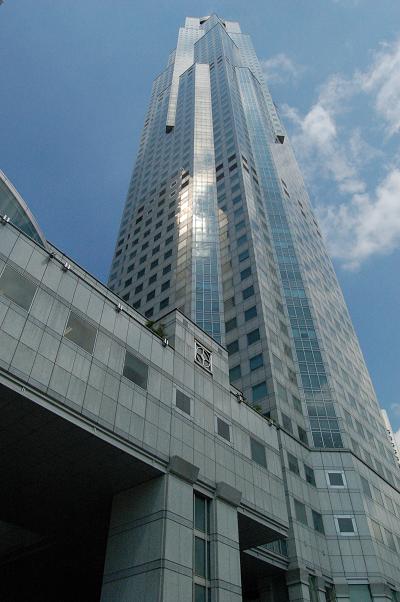
After breakfast it was back home and Jeff went off to work. I had no idea what I would do. So I looked at a map and decided I should try going down town using the bus and MRT systems. Tessie gave me some tips and I went on my way. It was amazingly easy to use and soon I was downtown in amongst the sky high buildings and sticky air of Singapore.


Wednesday, May 12, 2010

Stuck Cat

Yesterday we found a cat stuck in a tree. It was not however in the place you would expect it to be. It was stuck in the middle of the hollow trunk with only a tiny window of a crack opening onto the driveway and apparently a larger hole up top through which it could not return. The first thing I did was laugh.

By the time Stephen came home the cat was a little more upset by its predicament (ie, it hissed rather than meowed pitifully). So I dumped a some food down the crack and managed to get a small yogurt container in as well, into which we siphoned some water (using the fish vacuum-y thingy). This seemed to calm the cat down and it curled up at the back corner of its little prison. Stephen meanwhile got the saw and began to enlarge the hole enough for the cat to get out.

This was of course, all happening in the dark. So there I was in my socks holding a weak flashlight on the hole, Stephen was beside me sawing away at the tree (which is very spongy) with a flickering headlamp on his head and the cat was curled up looking so utterly comfortable in his little nook.

At one point our landlord came by, bringing the rubbish bins up from the curb. I feared he might um, worry about what we were up to. But he was just as worried for the cat and offered to bring the axe tomorrow if we couldn't extract the cat ourselves that night.

Finally, we had what we thought would be a big enough hole (and I had to grab some dinner still before I headed out to quilting). So we packed up and headed in, hoping the cat would sort the rest out itself. Which it seems to have handled just fine, that or a space ship came in the middle of the night and used their tractor beam to pull the cat back up through the hole in the top and off into outer space.

I wonder. . .

(sorry no pictures, my camera is at the doctors' office and I'm not too sure how photogenic angry cats are anyways)

Sunday, May 9, 2010

Happy Mother's Day Moms!


Here we are on the other side of the world. Far away from family and friends. But we still love you very much and think of you often. Hope you do the same!

Saturday, May 8, 2010

Antarctica: Just another place?

My first public lecture took place this past week. Wednesday evening from 6:30 to 8pm. Mine was the first in a series of four lectures on the different aspects of Antarctica. I was terrified. I have never had to present something for an hour and a half, keeping people interested and engaged in what I have to say. Especially since it was on the theory behind my research. Who would want to hear that?! As it turned out 26 people did (among them my supervisor and three peers from Gateway). I had been preparing for this talk for about 3 weeks, getting slides together, thinking about what to say and what to do to keep people interested. And suddenly it was Wednesday morning, I still had slides to finish and ideas to cement. Aaaaahhhh!!!

But you know what it went well. In fact it was amazing. People listened to my every word, they asked questions, they looked thoughtful when they heard what I had to say. What a novel feeling; to have people pay money to hear me talk about my research, my interests, my passions.

I know mom and dad wanted to hear about it so I've come up with a mini written version for here. Read it if you like or save it for when you're really bored or just leave it. All up to you.
___________________________________________________


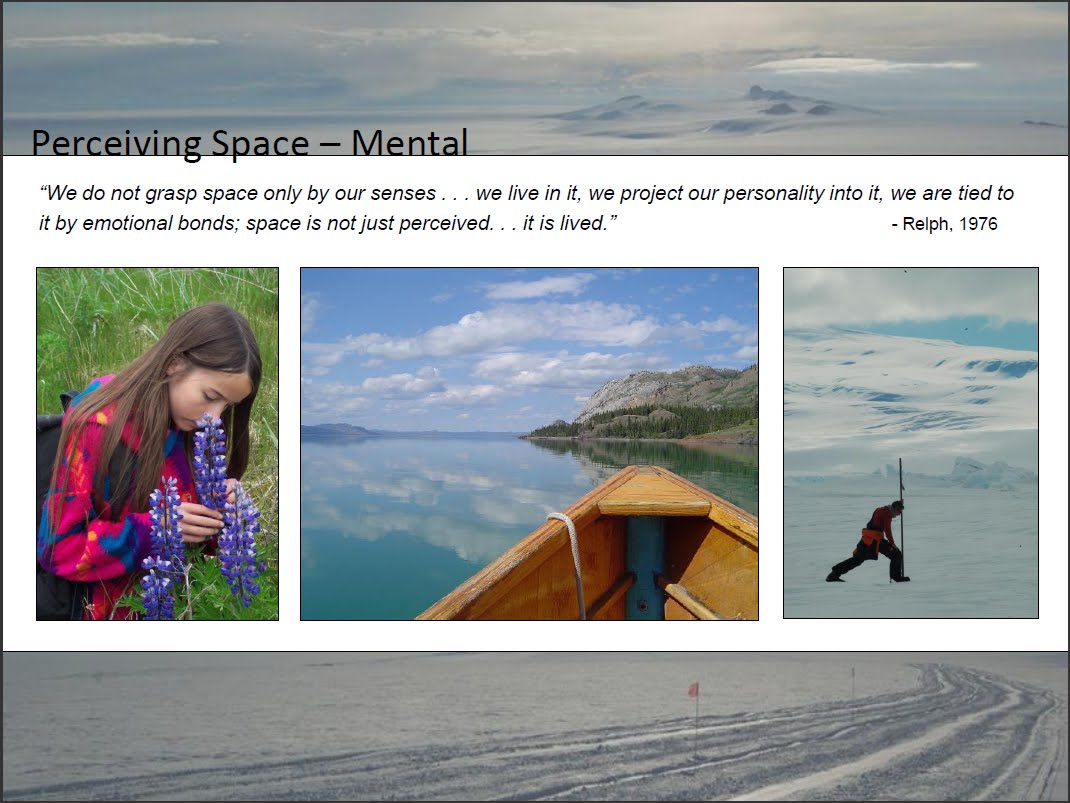
We often go through life without taking much thought as to how we come to see the world around us. It just is and we're happy enough to just accept that. But how do we come to perceive and understand the places we've never been to? How can we care so much for distant lands we may never experience ourselves and not care enough to pick up the pieces of trash we pass in the streets of our own homes? It is these questions that shape my research on New Zealanders connections to Antarctica. And the focus of this little segment is on the theory behind how we perceive and put meaning on far away places like Antarctica.


We perceive the world around us through our bodies and our minds. Using our five senses, sight, hearing, smell, taste and touch to learn about the environment we are in and our minds to help guide our senses and put meaning on what we see. The different ways we use our senses shapes how we associate meaning to what we sense. For example, sight is often our most relied upon sense. And in a way it is seen as our most objective sense, we see the world around and outside us. We are able to observe what happens around us without influencing what we are seeing. It allows us to remain distant and removed from the environment around us. Our other senses, like hearing, smelling and taste on the other hand require environmental information to physically enter our bodies. The sounds we hear enter in through our ears (holes in our head), smells waft in through our noses and the things we taste enter our mouths and feed our bodies. These are subjective and our interaction with them changes them (or us), making them far more emotional. Our sense of touch is one of our most intimate senses and although we have the saying "seeing is believing" our sense of touch is associated strongly with trust and truth. Think of the act of pinching ones arm to verify that you are really experiencing whatever it is you are experiencing.


Our minds also play a role in what we perceive around us. Our interests and purpose in an environment will determine what we notice and look for, thus shaping what we take in. Our personal experience and knowledge, our ideas, beliefs and values all work together in shaping the environmental information we receive from our bodies and give meaning to the environments we experience. The same space experienced by different people can mean very different things; Mount Erebus on Ross Island in Antarctica was the sight of a tragic tourist overflight crash in 1979, so for many, Mount Erebus is grave, a memorial, a sad place. Mount Erebus is also a peak to be climbed by those strong enough to endure the physical and mental challenges offered by an Antarctic mountain. It is a volcano to research. It is a scenic prominence to paint or photograph. It all depends on who you are, what you know, what you believe and so much more.

So our bodies bring in environmental information and our minds help direct our bodies and apply meaning to what we see. We bring these things together and create a sense of a place. Sense of place is an ever evolving idea, it is never complete and changes as you change. It is based on who you are, what you know and the experience you have of the place. This is where Antarctica is very different from most other places, because for most people the experience they have of Antarctica is had through museums, books, movies and other peoples stories. So an Antarctic sense of place is commonly built on the senses of others. This brings up an interesting question hotly debated in the human geography realm of sense of place and that is whether the physical environment plays an important role in determining our sense of place.


Constructionists believe that the physical environment plays no role in shaping our sense of place. They believe that a sense of place is purely shaped by our minds, the meanings we place upon a landscape are the only meanings present. Thus, Antarctica would not be the Antarctica we know without us thinking about it. On the other side of the coin, Being-in-place theory suggests the physical environment does play a role in determining how our sense of place is shaped. Either by the sheer fact that the physical environment will determine how we interact with it and therefore shape the meanings we associate with it, or by the idea of genius loci. This is Latin for "spirit of the place", it refers to the idea that every place has a spirit of its own and it is this that we are experiencing when we experience a place. It is this spirit that artists commonly refer to trying to capture in their artwork and share with others.

So whether we believe the physical environment plays an important role in shaping our sense of a place or not, we all sense place. For a place like Antarctica, where most people do not get the opportunity to experience the place first hand, those experiences are shaped by stories from people who have been there, movies based on or about the continent, books, advertising that uses certain images to sell their products, museums and other such things. We are left with these second-hand sources of information to form our sense of place. Although they all range in the visions, sounds, ideas and feelings they propose for Antarctica, they all work to create an idea of the place. Integrating this information with who we are, what we already know and believe, we come up with Antarctica. Our own version, unlike anyone elses.

___________________________________________________

There you have it. A summarized version of my talk. Now I just need to squish that down into 10 minutes and I'll be set for Oslo and Hobart!

Wednesday, April 28, 2010

Homesickness

The changing of seasons, especially from summer to fall, always makes me long for home. A sense of cosy comfort, a place to curl up with my knitting (or quilting), warm tea and watch the world change in its own infinitely beautiful way. As much as I am enjoying Christchurch and New Zealand, I find myself of late feeling quite unsettled and nesty. I look through home decorating books, browse the blogs of young mothers and try harder and harder not to think about what we'll do after I graduate. Most importantly, make a home.

I'm homesick for a place that is still only in my dreams. Just waiting to be born.

Hmmm. . . . . I have an idea.
___________________________________________

In other more exciting news, we helped one of our friends celebrate his 30th birthday. He's a big car guy, so we whipped him up a sporty green '77 Corvette Stingray (which just happens to be his - in real life too, not just cake life).


It proved a success and was later followed by a smaller and more economical mini (which was also devoured).

Monday, April 19, 2010

Home Again

It's been an exciting few blogs, so I thought I'd bring it down a little and update you on the little things we've been up too.

My fervor for quilting has not abated and I've been stitching together a quilt top for our bed, as well as continuing with Kierans quilt. All I did was go to my favorite fabric shop, pick out my favorite fabrics and put them all together. I quite like the modern looking outcome. I even left a nice white patch where the cat likes to sleep so she can do her own designing with her fur.


Stephen on the other hand has had an exciting week. Thus, the note I received:


Sorry, short post today. But you now all know what happened to Stephen and his argon.

Saturday, April 17, 2010

Cooking with Possum


Photo courtesy of http://richard-seaman.com/Mammals/Australia/index.html

Well, it's done. Last night I pulled the possum out of the fridge and wrestled it into a pie. As it baked away in the oven my stomach was in knots - would it be good, would it be ok, would it be edible? I had searched the internet to no avail and none the game recipe books at the library made any mention of possums, even in the sidebar. What was I to do? I had to make it up.

The one note I had read at the library mentioned that cooking game in wine helped reduce the chewiness that is often associated with game. So some wine, stock, juniper berries and sage all went into cooking the meat. Lovely strong flavours to complement the possum. And what to put with the possum? Well, kumera seemed like a good place to start, a semi-wild food as well, the sweetness of it might help balance the strong gamey flavour. Then carrots and beets, two tasty, earthy foods drenched in the gravy made from the stock liquid and wrapped in a flakey pastry crust. I mean, how does that not sound good? Oh yeah, possum.

While the pie cooked away in the oven I was also concerned with what I might serve it with. I'm used to meat pies, and game meats in general, being served with a delicious fruity chutney to contrast the richness of the meat. Unfortunately, all I had in the freezer were blackberries (another semi-wild food here) so they would have to do. I was surprised and a little hopeful at the glorious (and very rich) smells that were emanating from the kitchen - perhaps not all was lost.

After almost at hour in the oven, the crust was nicely browned and I wanted a taste, so I pulled it out of the oven and cut myself a piece. It certainly smelled good. I dropped some chutney on the plate beside it and tucked in.

It was delicious. Amazing. Very rich and tasty with pockets of sweet, earthy beets. Wow!

I took it next door where we were meeting with our neighbours and offered it out. There was certainly a poor reception to start, but once Stephen (he had to taste it - it was our dinner that night) said it was good, a few of the braver folk tasted it and came to similar conclusions. Yessss!!!

So I have attached the possum recipe here in case anyone else in the world decides one day to give it a go. I found about 4 different recipes on the internet (all involving lots and lots of chili peppers) so this will vastly improve the culinary choices for cooking with possum. I hope those of you who try it enjoy it as much as we did.


Awesome Possum Pie

*Note: make sure you have a freshly killed (ie., not poisoned, or diseased) possum and age it appropriately in a cool place. We left ours in the fridge for a good 3-4 days. Also, the fat on possums is not good, so remove as much as possible before cooking it.

Ingredients
1 small possum, skinned, cleaned and jointed
2 1/2 cups chicken stock
1 - 1 1/2 cups red wine, Merlot was good
10 juniper berries
4 sage leaves
water

6-8 kumera, depending on size
a knob of butter
a splash of milk
Salt and pepper to taste

2 carrots
3-4 small beets
Olive oil

~1 Tbsp. butter
~1Tbsp. flour (equivalent to however much butter you put in - you're making a roux)

Directions


1. While jointing the possum, try to remove as much of the thin film covering the meat as possible, this will save time later. Place in a stock pot with stock, wine, juniper berries and sage leaves and enough water to cover the meat. Bring to a boil, then reduce temperature and simmer covered for ~1 1/2 hours.

2. Peel and chop kumera, place in boiling water and cook until soft. Drain water and place pot back on stove (heat turned off, the element should still be warm), mash kumera with butter and milk until you desired consistency of mash is produced. Season with salt and pepper to taste. Set aside.

3. Chop carrots into small cubes. Set aside.

4. Slice beets thinly and place on pan. Oil lightly and bake in oven at 200oC/400oF until soft, about 20 minutes.

5. Make flakey pastry of choice and chill in fridge.


6. Remove possum from pot, retaining stock liquid for later. Once the possum has cooled to touch, remove as much meat from the bones as possible and place it in a bowl. Discard bones.

7. Now, make the gravy. Place the butter in a pot and cook over medium heat. Once the butter has melted add the flour and stir until mixed. Keep stirring a little longer to toast the roux (this adds a little flavour and removes the floury taste). Add 3/4 - 1 cup of possum stock liquid (skim off the fat) and whisk until smooth. Bring to a boil, stirring constantly, and heat until the desired consistency is reached.

8. Add your meat and the carrots and beets, mix until everything is evenly coated. Pour into prepared crust. Spread the kumera mash over top and place in 200oC/400oF oven for 50-60 minutes, or until the crust is a nice golden brown. Remove and let cool for 5 minutes.


Best served with a lovely berry chutney. Mine was made with frozen blackberries (recipe at http://www.bbcgoodfood.com/recipes/2643/spicy-blackberry-chutney).

Enjoy!

PS. In New Zealand it is a widely known fact that possums are carriers of Bovine TB which humans can contract. However possums who contract this disease usually die within 6 months and are extremely rare to find (~2% chance of finding a possum carrying it). Other wild game, like deer, chamois and hare can also be carriers of this disease, but no one mentions this. . . .is there perhaps some bias here. To learn more, check out http://www.landcareresearch.co.nz/publications/infosheets/possums/possums_tb.pdf